Neck and Spinal Injuries
Spinal injury cannot be cured. The Central Nervous System cannot regenerate.
Swelling in spinal cord stops blood flow.
28% of broken neck victims found walking at the scene of the incident.
The cervical spine is the weakest link, has the most potential for disability. Possibility of C-spine damage is critical in the non-alert patient.
Conscious casualties tend to self-protect.
C3, C4, C5, keeps the diaphragm alive (above C5 is the big risk as the phrenic nerve provides messages for breathing movements).
Do not move unless in imminent danger of death!
In urban situations, mechanism of injury normally dictates full spinal immobilisation by emergency services.
However the more remote first aider does not always have physical resources to move the injured casualty from physical life-threatening danger, fully immobilised.
Cervical collars
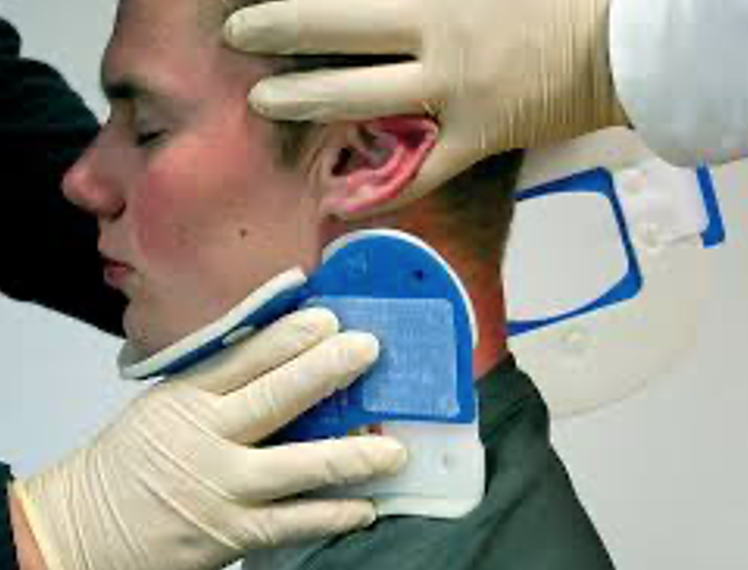
A cervical collar provides some protection when moving a casualty with a suspected neck injury.
Application of a cervical collar
Packaged casualty
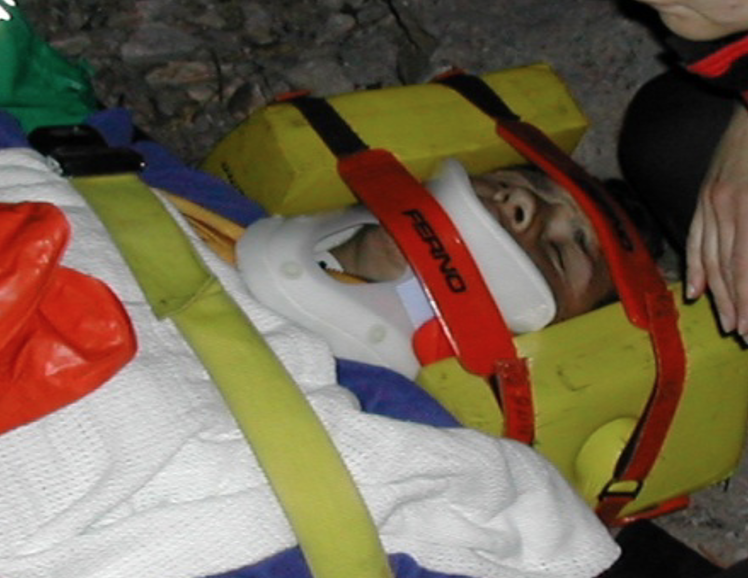
They can be applied to both conscious and unconscious casualties. They must be sized and fitted properly according to manufacturer’s instructions. The application of a cervical collar normally requires two people, one to maintain the head and neck in a neutral position and the second applying the collar without moving the neck. Additional stability is provided by head blocks and taping.
Considerations when treating spinal injury
- Do NOT move the casualty without very good reason
- Before evacuation or log roll immobilise both legs.
- Support head in neutral position – consider cervical collar to supplement two hands
- Do not raise legs
- For unconscious casualty be prepared to use jaw thrust or chin lift
- Monitor airway constantly – use suction carefully. Full log roll technique may be necessary to clear vomit.
- Continue to record vital signs as casualties may well have more than one injury
- Protect from the elements